
Community Conversations
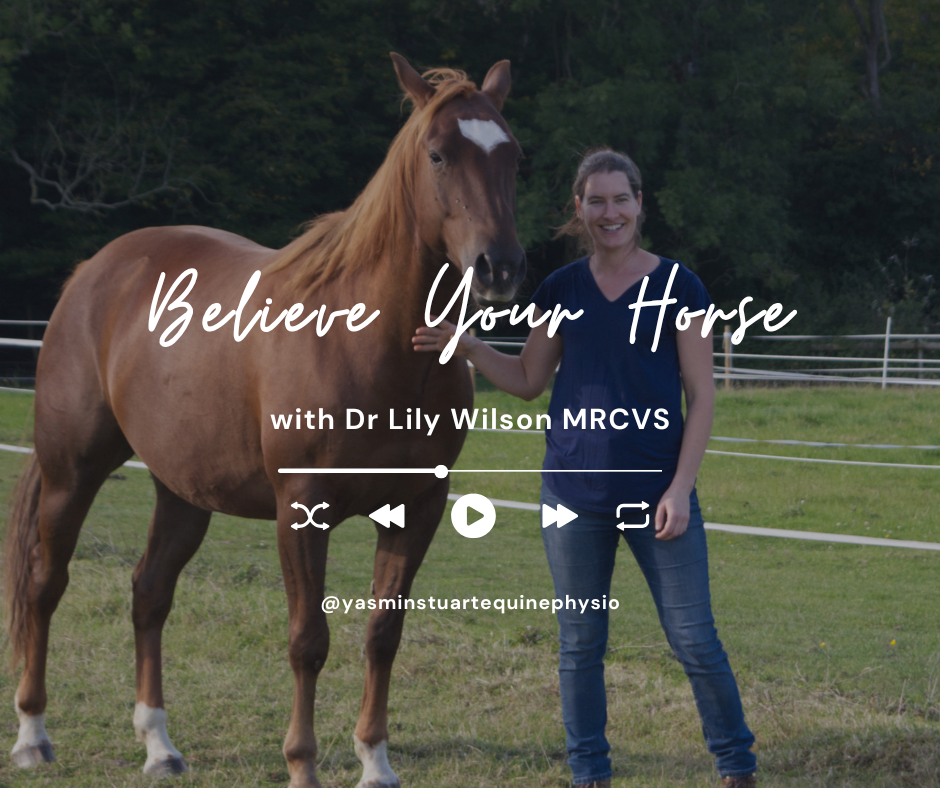
About Dr Lily Wilson MRCVS:
Lily is a veterinary surgeon with a focus on nurturing the innate nature of horses to safeguard their health and happiness. She identifies and addresses the deep root causes of ill health and wellbeing. She has a particular passion for and expertise in species appropriate lifestyle as a basis for good health, postural rehabilitation for injury prevention and recovery, ethical behaviour modification taking emotions, trauma and previous learning into account, and ecology and how our horse keeping can nurture biodiversity.
She helps horses and their owners both online and in person, through teaching, reviewing cases, and guiding a who horse approach to investigation, recovery, and prevention. She runs a whole horse rehabilitation boarding facility on a track system in West Sussex, UK, especially for horses who require a whole horse investigation, barefoot rehabilitation, recovery from painful, postural, and movement problems, or whose behaviour has made investigation or treatment difficult so far.
You can find out more about Lily at www.nurturingequinenature.co.uk
Here are some take home points from this conversation for you to reflect on:
1) Horse health is never “just one thing”
Pain, behaviour, posture, hoof balance, dentistry, diet, environment, training, emotional safety and human expectations all overlap to influence your horse’s wellbeing.
Many problems are rooted in lifestyle and management - failure to remedy these means that we are not helping the horse as efficaciously as we could be.
2) The goal is broader than just the absence of disease
Horses should live a live of thrive, rather than perpetually being fixed just enough to do want humans want them to do.
The horse-human relationship is part of rehabilitation - healing is about enhancing communication with one another and building trust.
Consent and emotional safety are a fundamental part of healthcare - cooperative care is an essential part of enabling your horse to live a healthful life.
Quick fixes should not be the aim as rehabilitation is an ongoing journey, often requiring long term management and this cannot be achieved through one singular solution or one appointment.
3) A formal diagnosis is not always the whole answer
A horse may have pain, dysfunction and compensatory patterns that allude formal diagnosis, and fear, trauma, or learned associations may continue even after the original issue has been resolved.
4) Doing less with your horse can reveal more about their lived experience
There is significant power in pausing, observing and allowing the horse to participate rather than rushing through tasks.
5) Believe your horse
Horses are honest and generous. When they exhibit discomfort, show fear or reluctance, they have no reason to lie about it. Take their behaviour seriously, and seek professionals who will too.
Your observational skills are founded upon your capacity to pause and be present in the moment - I highly recommend these practical videos to help you cultivate these skills: