MODERN CENTAURIAN ACADEMY
Blending science and compassion to create lasting change
An online learning space for people who believe that evidence and intuition can exist side by side, and that lasting change comes from understanding their horse and themselves.
Many people enter the horse world due to their unencumbered love of horses and all that they signify – freedom, grace and a little piece of the wild – and then they quietly begin to question what they are seeing and how they are told they should be around horses.
For some of us, working with horses deepens our introspection. We begin to notice how our actions affect not just the horse’s body, but their mind too – as well as our own emotional state.
This means that we simply do not fit in many traditional training paradigms:
We want science, but not at the cost of compassion.
We value feel and intuition, but don’t want to abandon evidence.
We want something more integrated – a culmination of awareness of our horse’s mind and body, as well as our own thoughts, feelings and desires.
Modern Centaurian is a term I coined to describe a horse-human partnership built upon a combination of evidence, intuition and feel – in service of the horse’s physical and emotional wellbeing.
It recognises that science doesn’t have to be cold, and compassion doesn’t have to be vague.
The Modern Centaurian Academy is an ever-evolving online learning space designed to support welfare-led training and bodywork through both scientific understanding and compassionate awareness.
Rather than offering rigid methods or prescriptive systems, the Academy invites thoughtful exploration of the horse as a whole being – with their body and mind being inseparable.
This is not a course with a fixed endpoint, but a growing body of learning intended to grow over time, alongside you.
The Academy is designed to be flexible, so you can learn in a way that supports both you and your horse. You can go through the Academy in two ways:
Option 1: A Progressive Learning Pathway
For people who prefer structure, you can choose to move through the Academy lesson by lesson, building understanding progressively over time.
Lessons are intentionally bite-sized and layered, allowing you to explore without overwhelm whilst still building depth of knowledge in each subject area.
Option 2: Horse-Led Navigation
For people who are starting with a horse in front of them, you can use their posture blueprint as a starting point and use the flow-style structure that helps you to:
Recognise patterns in your horse’s posture and movement
Understand what may be contributing to what you are seeing
Be directed to the most relevant lessons, bodywork and training considerations.
No matter how you choose to navigate the Academy, you will get:
Theory – in anatomy, biomechanics, training and rehabilitation
Observational Assessment Skills – including posture, palpation and movement
Bodywork Techniques – starting with energy work, progressing through myofascial release, to mobilisation
Training Patterns – to support postural change through thoughtful movement
Enrichment and Management Strategies – to form a truly whole horse approach.
You will also get:
Access to a Private Facebook Community – where you can seek guidance, ask for support or feedback, immerse yourself with the community and learn from others.
Monthly Q&As – an opportunity to deep dive with Yasmin on areas of interest by submitting questions for her to answer, and go through case studies of interest.
Monthly Community Conversations – where you can listen in on thoughtful conversations with people whose work, perspective or lived experience offers something to reflect on. These are relaxed discussions designed to spark curiosity, challenge familiar narratives and invite new ways of thinking about horses and ourselves.
At the heart of the Modern Centaurian Academy is the belief that lasting change happens when scientific knowledge is applied with care, humility and emotional awareness.
Welfare-led training and bodywork are not about achieving a look or outcome – they are about supporting your horse’s capacity to feel safe and supported to enable their body to unwind.
There is deep joy, love and appreciation built into this work – in noticing small shifts, in listening intently, and co-creating.
This Academy is for you if you:
Care deeply about welfare and ethical practice
Enjoy thinking, reflecting and questioning – whilst not taking yourself too seriously
Want to understand anatomy and biomechanics without undermining feel
Are interested in supporting horses emotionally as well as physically, outside of the confines of traditionalism
Want to join a community of like-minded people.
This Academy might not be the right fit if you are seeking quick fixes, rigid training systems, or performance driven outcomes divorced from the horse’s experience.
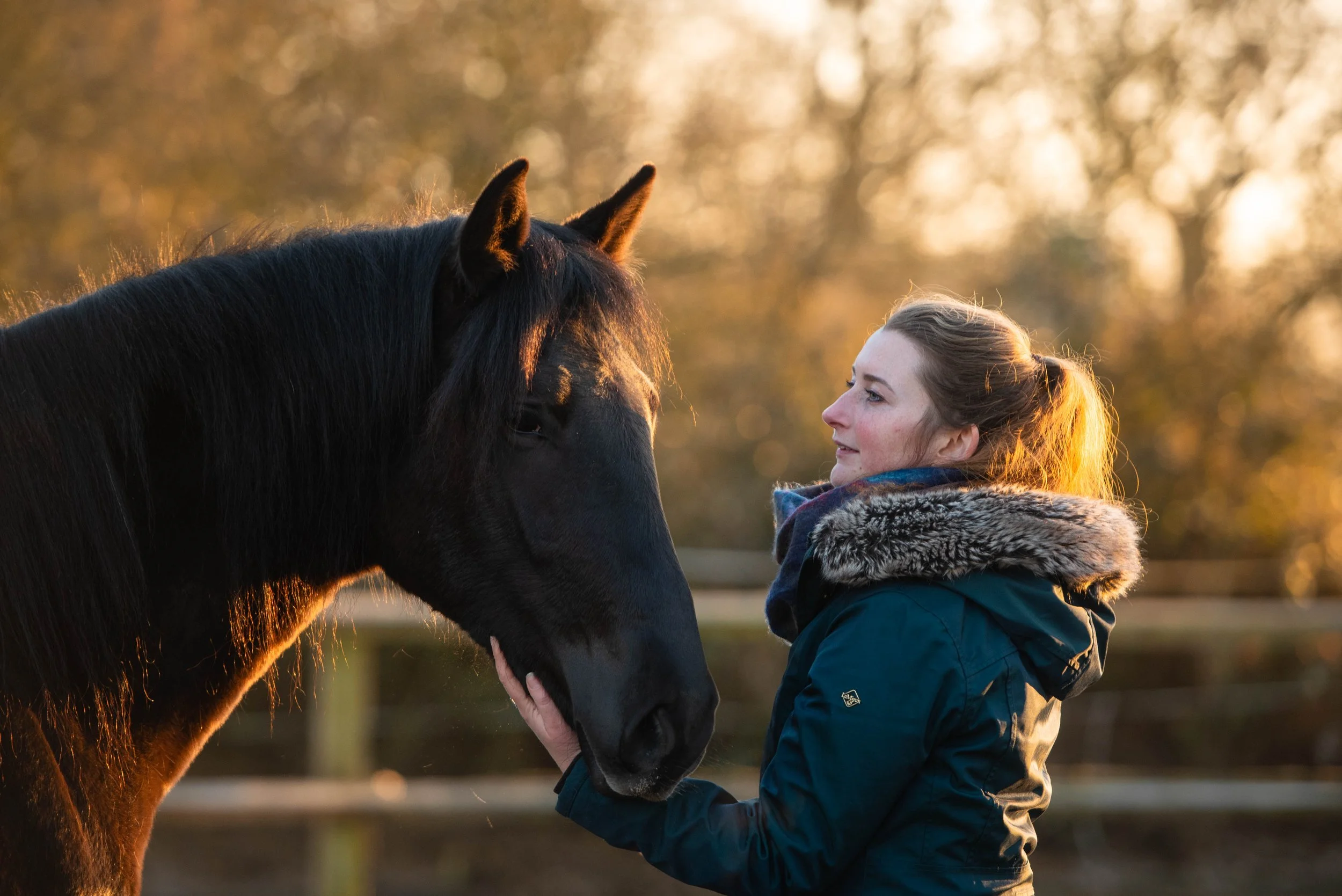
An equine physiotherapist and trauma-informed horse trainer whose work with horses has continually deepened my introspection.
My journey with horses, through both bodywork, training and behavioural science, has shown me that the most meaningful change happens when science is held with compassion, and when we remain curious about both the horse’s mind and body, as well as our relationship to our own mind.
The Academy is an extension of my way of thinking – a space to share knowledge, ask better questions, and support horses with integrity.
Yasmin has been practicing equine physiotherapy for 10 years. Since achieving her Level 6 Diploma in Equine Physiotherapy and Rehabilitation, she has continued to expand her expertise, studying a wide range of evidence-based bodywork modalities and ethical training methodologies that form the foundation of her practice today.
If this way of being with horses resonates, I’d love to have you join our community.
I’m Yasmin
An online learning space for people who believe that evidence and intuition can exist side by side, and that lasting change comes from understanding their horse and themselves.
Modern Centaurian Academy
-
Welcome To The Modern Centaurian Academy!
-
Week 1: Postural Hygiene
-
Beyond the Body: Honouring Your Horse's Sentience
Posture is more than muscle and movement - it’s your horse’s story. Every stance reflects safety or stress, confidence or concern. In this course, you’ll learn how to blend science and compassion to unlock freer movement, deeper connection, and lasting change for both you and your horse.
-
Learning Your Horse's Preferences
Every horse has preferences - small choices that reveal a little bit about their personality. When we notice and honour these, we show our horse their voice matters. This builds safety and mutual respect, turning training into a partnership where the horse feels seen, and free to express themselves.
-
Beyond the Body: Be Aware of Your Bias
Our inner narratives and past influences shape how we see a horse’s posture—sometimes focusing on flaws and missing signs of ease. By softening bias with awareness and curiosity, we can balance critique with appreciation, leading to clearer, more compassionate connection with our horses.
-
Guided Breathwork: Can You Access Your Own Body?
This guided breathwork session invites you to slow down and notice subtle sensations in your body. By experiencing this yourself, you gain empathy for your horse’s challenges during bodywork and training, encouraging patience, compassion, and a more ethical approach that meets them exactly where they are.
-
Is *That* Appropriate Right Now?
Postural development isn’t about fixing every deficit we see. Context matters: posture reflects training stage, emotional readiness, environment, or protective patterns. True harm arises when we push too soon. Ethical horsemanship means asking not “how to fix,” but “is this appropriate now?” - supporting strength, confidence, and sustainable change.
-
-
Week 2: Influences on Posture
-
Conformation vs Posture
Conformation is the horse’s structural blueprint, while posture is its living expression - shaped by comfort, experience, and emotion. By distinguishing the two, we can identify strain, support wellbeing, and reduce conflict. Posture becomes more than form; it reveals the horse’s story, tension patterns, and potential for positive change.
-
Movement is More Than Exercise
Your horse’s movement is shaped by emotion and experience. Each motion becomes a message between brain and body, shaped by environment, handling, and training. When movement feels unsafe, traditional methods fail. True balance arises from curiosity, freedom, and emotional safety - allowing the nervous system to explore, adapt, and rediscover joy in motion.
-
Building Curiosity & Problem Solving
This video delves into the importance of curiosity and problem-solving in your horse’s learning journey. Discover how supporting your horse’s natural intelligence and autonomy helps them feel empowered, engaged, and confident when working with humans. This is a simple, welfare-focused exercise for creating an environment that inspires exploration and growth.
-
Creating A Safe Space
Explore how visualising a safe, grounded space can help you stay calm and centred when your horse becomes tense and dysregulated. Through emotional contagion, your regulation helps soothe your horse, creating safety, trust, and connection in moments of challenge - whether during bodywork or training.
-
-
Week 3: The Poll
-
The Poll: A Gateway to Connection
The poll is the point where your horse’s biomechanics and emotions meet. This video discusses how the TMJ, hyoid apparatus, and AO and AA joints interrelate, how restriction here affects the whole body, and how your horse’s emotional experience influences comfort.
-
Palpation for Atlanto-Occipital (Poll) Extension
This video demonstrates palpation of atlanto-occipital extension, identifying normal versus restricted movement between the occiput and atlas. It includes guidance on how to position your body to enhance horse comfort, and your sensitivity while assessing poll mobility, supporting precise observation of functional range and subtle motion quality.
-
Melting Poll Tension
In this video, we explore a gentle energy and light-touch technique to help soothe tension around the poll. You’ll learn to cultivate your own comforting energy, use soft contact over the nuchal crest, and adapt the approach for horses with poll trauma to encourage relaxation, and physical and emotional release.
-
Palpating the TMJ
This video explores palpating the temporomandibular joint (TMJ). You’ll learn to feel how the tissues respond and change beneath your fingertips, and to compare left and right for subtle differences. Gentle touch deepens your awareness of how comfortable your horse’s TMJ is.
-
Melting TMJ Tension
In this video, we explore a gentle energy and light-touch technique to help soothe tension around the TMJ. You’ll learn to cultivate your own comforting energy, use soft contact over the zygomatic arches, and adapt the approach for horses with head trauma to encourage relaxation, and physical and emotional release.
-
Palpating the Hyoid Apparatus
This video explores how to palpate the hyoid apparatus using light touch. You’ll learn to locate the lingual process, assess symmetry and tissue texture, and identify subtle signs of restriction or discomfort.
-
Melt Your Horse's Hyoid: "Rest Your Head Here"
In this video, we explore a light-touch and visualisation technique to help melt the tension around the hyoid apparatus. You’ll learn to build imagery in your head that supports downregulating the deep muscles around your horse’s hyoids to help bring about relaxation.
-
Training Atlanto-Occipital Extension
Before we ask our horses to move in balance, we must first help them access that balance. This gentle take on baited stretches uses a target to develop atlanto-occipital mobility and proprioception. This encourages mindful movement without frustration, and fosters a deeper connection through understanding and trust.
-
-
Week 4: The Neck
-
The Neck: A Conversation of Contact
Explore the intricate relationship between the bones, muscles and ligaments within the horse’s neck. This lesson delves into anatomy, movement, and ethical training, guiding you to recognise true freedom of motion and the welfare implications of our choices.
-
The Neck: Shaping Posture Through Environment
Our horses spend most of their lives outside of formal training. This lesson explores how everyday eating postures and environment shape their neck posture and influence their nervous system health — and how thoughtful forage placement can encourage different muscle activations, and softness throughout the topline, supporting well-being far beyond the training session.
-
Palpating the Neck
This video demonstrates how to palpate your horse’s neck. It includes guidance on how to assess your horse’s association to pressure on the headcollar, how to help them to soften to contact on the head collar and how to assess lateral bending in their neck.
-
Releasing the Nuchal Ligament
This soft, flowing technique helps unwind tension through the horse’s topline and gently reactivate the nuchal ligament. By working slowly from wither to poll, you invite length over the topline, release through the rhomboid muscles and help your horse to find new found length in their neck.
-
Releasing the Under Neck
This gentle jugular groove technique is one of my most favourites for softening the underside of the horse’s neck and downregulating their nervous system. It’s simple yet powerful, inviting calm, allowing your horse to release tension using the support of your grounded presence.
-
In Hand Neck Release
This movement-based exercise helps release tension through the horse’s neck and activate their topline and shoulders. Using positive reinforcement, clear cues, and awareness of your body language, we guide the horse toward greater freedom and range of motion.
-
-
Week 5: The Shoulders
-
The Shoulder Complex: Structure & Motion
This video breaks down the horse’s shoulder complex - developing your understanding of anatomy and range of motion. Learn to identify restrictions, interpret posture, and understand how scapular glide, scapulohumeral mobility, and muscle balance influence forelimb function.
-
Assessing Shoulder Range of Motion
This lesson focuses on assessing your horse’s shoulder range of motion through movement and feel rather than palpating muscles. By observing how the leg hangs, glides, and circles, you can identify restrictions, fascial tightness, and compensations - gaining clearer insight into how the shoulder and elbow work together to create motion.
-
Treat Scatters for Happier Movement
This treat scatter exercise helps your horse release tension and explore new movement without direct influence from the handler. By engaging the nervous system through encouraging foraging behaviours, we encourage improvement in global range of motion - though most notably through the neck, shoulders and back.
-
Melting the Shoulder Crease
This technique targets restriction where the neck and shoulder meet. Using light fingertip contact along the scapular edge, you’ll help release tension through the cervical trapezius, subclavius, and brachiocephalic muscles, improving comfort, neck mobility, and posture while supporting relaxation your horse can carry into everyday movement and training.
-
Mobilising the Shoulder
This technique supports freer shoulder movement by encouraging micro flexion and extension through the elbow and point of shoulder, and scapular glide. Using subtle motion and breath awareness, we promote glide between the scapula and ribcage, improve range of motion, and help the horse release tension without force or pressure.
-
In Hand Shoulder Mobilisation
This in-hand exercise uses halt as a positional release to restore shoulder symmetry and freedom. By alternating split stances and encouraging relaxation, you’ll help your horse balance protraction and retraction, improve scapular glide, and reduce asymmetry that limits forelimb range of motion and overall quality of movement.
-
-
Week 6: The Back
-
The Back as a Bridge
Your horse’s back is essentially a bridge - transferring power from the hindquarters into the forehand. This week explores how spinal structure and posture reflect movement quality. Learn to recognise restriction and freedom to train your eye to your own horse’s movement.
-
Palpating the Spine
Learn how to assess your horse’s spine for signs of pain or restriction. This three-step palpation technique identifies heat, reactivity, and limited range of motion - helping you recognise when veterinary assessment or further support may be needed.
-
Mobilising the Spine
This is a staple spinal technique to restore a more neutral back. You’ll scan for “sticky” segments along the midline, then use tiny lateral micro-mobilisations over each spinous process to ease fascial hold, wake up multifidus, and improve segmental glide. You horse will give you feedback, helping posture soften without force.
-
Target Trained Baited Stretches
This video demonstrates how to teach baited stretches using a target stick instead of food lures. This approach reduces frustration, improves accuracy, and gives clear feedback about your horse’s physical capabilities. You’ll learn how to shape the stretch to encourage healthy spinal motion, and avoid compensatory patterns.
-
-
Week 7: The Thoracic Sling
-
Assessing the Thoracic Sling
The thoracic sling is the foundation of your horse’s posture and balance. In this lesson, learn how to assess sling development, understand ribcage–shoulder relationships, spot asymmetries, and recognise the whole-body factors that support a healthy thoracic sling.
-
Releasing the Thoracic Sling
In this video, you will learn three hand hold techniques, combined with light touch, to release tension around the withers, shoulders, and sternum without provoking brace.
-
Activating the Pectorals
Many horses on the forehand are blocked through both the shoulders and the hindquarters. This video shows you how forward-shifted ribcages, upright shoulders, and tight lumbars limit your horse’s ability to weight-shift. You’ll learn practical ways to restore shoulder mobility, activate the pectorals, which in turn helps them to access their thoracic sling and their shoulder mobility.
-
-
Week 8: The Hindquarters
-
The Hindquarters
This video explores the skeletal, ligamentous, and muscular structures that shape hind end posture. You’ll learn how the lumbosacral and sacroiliac regions function, how the iliopsoas influences posture and movement, and how to assess pelvic mobility to recognise dysfunction and support healthier, more balanced biomechanics.
-
Hip Release
This is a super simple technique to help your horse to release over their back and create more freedom in their hips. I also love this one for creating a bit more safety around hind foot handling - if your horse can release their hips and relax into a leg lift, it makes it easier to manoeuvre their legs around - your hoof care provider will thank you!
-
Mobilising the Lumbosacral Region
This technique builds on gentle spinal mobilisation by targeting the lumbar transverse processes and pelvis. Using clear anatomical landmarks, you’ll learn to assess and mobilise each segment, support relaxation through the hind end, and encourage healthier lumbosacral and pelvic mechanics.
-
Iliopsoas Release
This technique focuses on releasing tension in the iliopsoas complex after mobilising the lumbosacral region. By using light touch and clear visualisation, you help the horse soften through the lumbar spine, psoas, and abdominal tissues, helping your horse to improve their posture, acquire freer hind-end movement, and greater comfort.
-
The Mechanics of a Healthy Back-Up
This lesson reframes the traditional back-up as a precise, strength-building exercise rather than an obedience task. You’ll learn how head and neck posture, thoracic sling engagement, and controlled step quality determine whether the movement develops true hind end strength - or simply creates tension, compensation, and discomfort.
-
-
Week 9: The Limbs
-
Leg Handling Habits for Postural Release
Thoughtful leg handling offers far more than basic cooperation: it meaningfully influences posture, proprioception, and whole-body comfort. This video explores how supported limb-lifting, and intentional placement of each foot can help horses find neutral balance, release tension, and improve symmetry - while also giving valuable insight into their physical capabilities.
-
Grounding Your Horse
This technique invites you to include the horse’s legs as an integral part of posture restoration and bodywork. By gently working at the coronet band, you can support grounding, reduce tension through myofascial chains, and encourage whole-body release. It’s very simple and quiet, whilst helping horses feel more settled and connected in their bodies.
-
Positional Release with Balance Pads
Balance pads are a versatile tool for developing posture, proprioception, and comfort. This video explores their use as both a training aid and a positional release, with a focus on wedged pads to support horses with low heels.
-
-
Week 10: The Horse Posture Blueprint
-
The Hypervigilant Horse
Hypervigilance in horses reflects sustained nervous system upregulation rather than a training or behavioural deficit. Horses in this state often experience heightened anxiety, impaired learning, disrupted musculoskeletal function, and compromised welfare. Chronically elevated head and neck posture and increased ventral neck recruitment alter spinal load, reduce shock absorption, and predispose the horse to discomfort and maladaptive movement patterns.
-
The Downhill Horse
This video explores how downhill posture can increase forehand loading, alter spinal mechanics, and contribute to chronic compensation and discomfort, which over time can influence how a horse engages with movement and their environment.
-
The Concertina Horse
Sitting between hypervigilance and withdrawn, concertina is the third most common posture I see in horses. It is characterised by over-flexion at the poll, extending at the base of the neck, and over-flexing the lumbosacral region. This posture reflects compensation as well as reduced deep postural stability and altered nervous system regulation.
-
-
Week 11: Myofascial Lines
-
A Brief Introduction To Fascia
This introduction explores fascia’s role in force transmission, nervous system regulation, and myofascial lines, offering a framework for understanding pain, posture, and physical development with the horse’s nervous system in mind.
-
Your Horse's Superficial Dorsal Line
In this video, we look at how the superficial dorsal line influences your horse’s posture. You will learn how fascial tension affects biomechanics, and why understanding anatomy empowers you to make clear, informed training choices that support your horse’s long-term wellbeing.
-
Your Horse's Superficial Ventral Line
Explore the horse’s superficial ventral line and its role in your horse’s posture. This video looks at how the ventral line supports the topline, why dysfunction is often missed, and how to begin to restore health and mobility in this line.
-
Your Horse's Deep Dorsal Line
This video looks at the deep dorsal line, tracing its path from the tail to the poll. We look at its vital role in postural stability and spinal health, with practical insights into common dysfunctions and nervous-system-aware strategies for restoring healthy spinal motion.
-
Your Horse's Deep Ventral Line
This video looks at the deep ventral line, through it’s three portions that track from the inside of your horse’s hind hoof, from their tail, via their internal organs to their hyoid apparatus. Though complicated, this line is fascinating and has a strong influence on posture as well as biological functions.
-
-
Bonus Material
-
Functional Feet: What They Are & How To Get Them
Join Integrative Equine Podiatrist, Beccy Smith, of Holistic Equine where she discusses Functional Feet: what they are, why horses need them and how to get them!
-
Finding Joy in Training
This video takes a refreshing look at what truly motivates our horses. In this webinar, Equine Behaviour Trainer Lucy Chester discusses how to recognise joy in training, nurture autonomy, deepen your partnership, and introduce exercises your horse will love - all while supporting their physical and emotional wellbeing.
-
WANT TO DISCUSS YOUR LEARNINGS?
Book your 1-2-1 Learnings Review with Yasmin
If you’d like to discuss what you have learned in this course, you can book a 1-2-1 online review with Yasmin. To do this, visit our contact page using the button below.